Diptyque was founded by an interior designer, a painter and a stage designer, and for its first years it sold fabrics. Perfume arrived seven years later, after the candles, which may explain why the house still thinks like a set designer.
Three friends, one cabinet of curiosities
In 1961 three friends opened a shop at 34 boulevard Saint-Germain in Paris. Christiane Gautrot was an interior designer, Desmond Knox-Leet a painter and Yves Coueslant a stage designer.
At first they sold fabrics and objects they liked, a kind of tasteful cabinet of curiosities. Scented candles came by 1963, and in 1968 they launched their first eau de toilette, L’Eau. Since 2005 the company has been owned by the investment firm Manzanita Capital.
Who drew those dancing letters on the label?
Knox-Leet hand-drew the black-and-white oval labels, with the letters dancing around the edges as if a playful typesetter had arranged them. They remain the house’s most recognizable feature.
It is a painter’s signature on every bottle and candle. Few brands can say their logo was literally done by hand, by a founder, for fun.
Should you start with a candle or a perfume?
Both, honestly. The candles made the name and are still the gateway drug for most people: you buy one as a gift, smell it, and then quietly keep it for yourself.
The perfumes are serious work, though, and many share their names and themes with candles. That means you can test a scent idea on your coffee table before you commit to wearing it.
A Greek fig orchard in a bottle
Diptyque perfumes often start from a place or a memory: a Greek fig orchard, a Vietnamese garden, a walk through a forest temple. The materials smell recognizable (fig leaf, rose, sandalwood, tuberose) rather than abstract or “perfumey.”
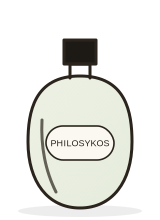
Diptyque Philosykos is the clearest example. Released in 1996 and composed by Olivia Giacobetti, it captures the whole fig tree: green, milky leaves, creamy fruit and dry, sun-warmed wood. It is one of the fragrances that made fig a respectable perfume note.
- Topthe first 15 minutesFig Leaf · Green Notes
- Heartthe next few hoursFig · Coconut
- Basewhat stays on skinFig Wood · Cedarwood · Musk
- Natural feel
- abstract recognizable materials
- Projection
- close to skin fills a ballroom
- Sweetness
- dry sweet
- Formality
- linen shirt black tie
How the house style is generally described, not a personal wear test
Where to go after the fig
| If you like | Try | Our take |
|---|---|---|
| Green leaves and creamy fruit | Philosykos | The whole fig tree, wood included |
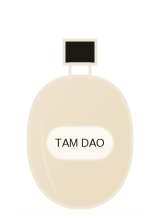
| Soft, creamy woods | Tam Dao | A gentle sandalwood |
| White flowers but not heavy ones | Do Son | A sea-breezy tuberose, lighter than most of its kind |
| Perfume that barely smells like perfume | Any of the above | Start with the candle version if one exists |
The overall style is relaxed and intimate. These are scents that make sense on a linen shirt, not ones that fill a ballroom.
Is Diptyque a house for perfume skeptics?
Anyone who likes perfume that smells of real things (plants, wood, skin, sea air) should try it. It is a good house for people who claim they “don’t like perfume,” because many of these scents barely smell like perfume at all.
That is either the greatest compliment you can pay a perfumer or a very polite insult. Diptyque seems to take it as the former.