Serge Lutens gets his name on the bottle, but he is not a perfumer. For more than three decades the person mixing the strange, dark ideas Lutens describes has been Christopher Sheldrake, whose name never appears on the box.
The architect who went to Grasse
According to Wikipedia, Sheldrake was born in 1955 in Madras (now Chennai), India. He meant to study architecture, but a three-month placement at the raw-materials firm Charabot in Grasse in 1974 pulled him into perfume, and the perfumer Georges Cœur hired him as an apprentice.
What followed was a tour of the industry. He worked for Robertet in England, spent time at Chanel in Paris from 1980, joined Quest in the UK in 1984 and then moved to Japan, where he created for everything from luxury goods to detergents.
- 1974
Placement at Charabot in Grassefact
- 1984
Joins Quest in the UKfact
- 1989
Meets Serge Lutens in Tokyofact
- 1992
Féminité du Boisfact
- 1993
Ambre Sultanfact
- 2001
Cherguifact
- 2005
Returns to Chanel to run fragrance R&Dfact
- 2012
Coco Noir, with Jacques Polgefact
How a Lutens perfume gets made
Sheldrake met Lutens, then Shiseido’s artistic director, in Tokyo in 1989. Their first big result was Féminité du Bois (1992), a cedar perfume for women, which he developed with Pierre Bourdon under Lutens’s direction.
The working method has stayed the same since. Lutens brings an image, a memory or a single material, and Sheldrake builds it, using the Givaudan palette of ingredients. The British Fragrance Foundation counts close to a hundred fragrances from the partnership.
Resins, honey and a hot desert wind
Sheldrake’s Lutens work leans toward dense, resinous and slightly odd compositions. Labdanum, honey, dried fruit, spices and woods turn up again and again, often with one unexpected note pushed to the front.
| Perfume | Year | House | The unexpected part |
|---|---|---|---|
| Féminité du Bois | 1992 | Shiseido, later Serge Lutens | Cedar sold as a women’s scent |
| Ambre Sultan | 1993 | Serge Lutens | Oregano and bay leaf in an amber |
| Chergui | 2001 | Serge Lutens | Hay and honey around tobacco |
| Coco Noir | 2012 | Chanel | A darker, sheerer side of Coco |
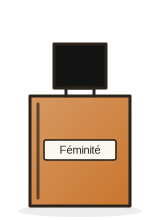
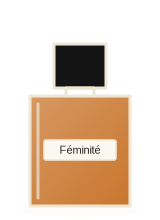
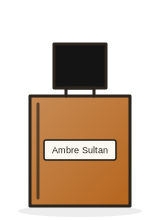
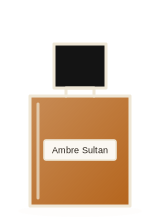
Cedar, amber and tobacco: three Sheldrake signatures for Lutens
Chergui is the most approachable of the three: sweet pipe tobacco, honey and hay, named after a hot Moroccan wind. Ambre Sultan is the one perfume writers often hold up as a reference amber.
Two jobs at once
From 2005 Sheldrake worked at Chanel as perfumer and director of fragrance research and development, alongside Jacques Polge and later Olivier Polge. He co-signed Les Exclusifs scents such as Coromandel with Jacques Polge, as well as Coco Noir in 2012.
He kept creating for Lutens throughout. He is also a founding member of the Société Internationale des Parfumeurs-Créateurs and has served as vice-president of the Osmothèque, the Versailles conservatory that keeps historic formulas alive. Wikipedia lists his Chanel tenure as running until 2025, while his collaboration with Lutens is the thread that runs through his whole career.