Jacques Polge studied English and literature, not chemistry, and then spent 37 years in charge of the most protected perfume formulas in Paris. In that time Chanel went from being the No. 5 house to being the house of Coco Mademoiselle, Chance and Bleu de Chanel as well.
From Provence to Chanel’s lab
Polge was born in 1943 in L’Isle-sur-la-Sorgue, a small Provençal town not far from Grasse. He studied English and literature at Aix-Marseille University before turning to perfume.
His early commercial work outside Chanel includes Diva for Emanuel Ungaro (1982). In 1978 he became Chanel’s head perfumer, following Henri Robert, who had in turn followed Ernest Beaux.
Did he make a bestseller in every decade?
Close to it. Each decade of his tenure produced at least one scent that became a fixture on department-store counters, and several of them still sit right next to No. 5 on the shelf.
| Perfume | Year | For | The pitch, roughly |
|---|---|---|---|
| Coco | 1984 | Women | Spiced, opulent oriental for the 1980s |
| Égoïste | 1990 | Men | Sandalwood, spice and attitude |
| Allure | 1996 | Women | A soft, blended floral with no single star note |
| Coco Mademoiselle | 2001 | Women | Orange, rose and patchouli, younger and brighter |
| Chance | 2002 | Women | Pink pepper, jasmine and musk in a round bottle |
| Bleu de Chanel | 2010 | Men | Citrus, incense and woods for the modern office |
Égoïste (1990) is the cult favorite: a sweet, woody sandalwood scent remembered almost as much for its advertising, in which women slam hotel shutters and shout the name, as for the juice itself.
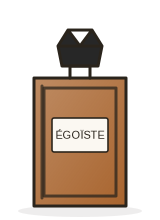
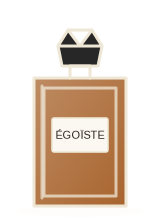
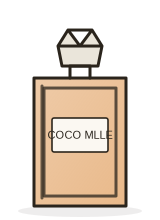
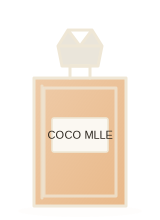
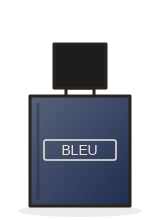
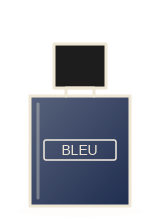
Three of his Chanel launches, from 1990 to 2010
Coco Mademoiselle (2001) did something harder: it made Chanel feel young without making it cheap. Orange and rose on top, patchouli and musk below, it helped turn the patchouli-heavy “modern chypre” into a mainstream style. Chance (2002) followed with a rounder, pink-peppered take in a circular bottle.
The Chanel style under Polge
Polge’s Chanels share a polished, seamless finish. Notes are blended so closely that it is often hard to pick out a single flower, which suits a house that sells restraint as luxury.
He also worried about where the flowers would come from. In 1987 Chanel began a partnership with the Mul family, flower growers near Grasse, to grow jasmine and May rose for its perfumes; Polge reportedly pushed for it because local jasmine production was shrinking.
- 1943
Born in Provencefact
- 1978
Becomes Chanel's head perfumerfact
- 1984
Cocofact
- 1990
Égoïstefact
- 2001
Coco Mademoisellefact
- 2010
Bleu de Chanelfact
- 2013
His son Olivier joins Chanelfact
- 2015
Olivier succeeds himfact
A handover inside the family
His son, Olivier Polge, joined Chanel in 2013 and took over as head perfumer in 2015. Chanel thus has had only four in-house perfumers in a century, and two of them share a surname.
Jacques Polge’s last major launches include Coco Noir (2012). Bleu de Chanel, from 2010, may turn out to be his widest reach: a men’s scent built to please almost everyone, which is harder than it sounds.