Most perfumers spend years in school before anyone lets them near a client. Olivia Giacobetti started working for Annick Goutal at 16, and before she turned thirty she had bottled the smell of a fig tree for two different houses.
A teenager in Annick Goutal’s lab
Giacobetti was born in 1966. Her father, Francis Giacobetti, is an artist, so a creative career was hardly a family scandal.
After her start with Goutal, she joined the raw-materials house Robertet the following year and spent seven years there as an assistant perfumer. In 1990 she founded her own company, Iskia, which meant she could take on clients without a big fragrance firm behind her.
- 1966
Born in Francefact
- c. 1982
Starts working for Annick Goutal at 16fact
- 1990
Founds her company, Iskiafact
- 1994
Premier Figuier for L'Artisan Parfumeurfact
- 1996
Philosykos for Diptyquefact
- 2003
Launches Iunx with Shiseido's backingfact
- 2016
Opens a new Iunx boutique in Parisfact
Why fig, and why twice?
Fig is a strange material for a perfume. The fruit itself smells of very little; the leaves, sap and bark carry the green, milky, slightly coconut-like smell people recognize from a Mediterranean garden in July.
Giacobetti built Premier Figuier for L’Artisan Parfumeur in 1994 and then Philosykos for Diptyque in 1996. Both treat the whole tree rather than the fruit, and both helped make fig a recognizable genre in niche perfumery.
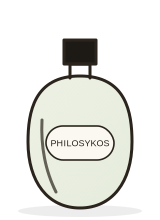
Diptyque Philosykos
Affiliate link: as an Amazon Associate we earn from qualifying purchases, at no extra cost to you.








Materials that recur in her best-known compositions
The see-through school of perfumery
Her scents are often described as transparent: light in weight, built from few materials, and closer to a photograph than an oil painting. That style suited the small niche houses of the 1990s, which wanted ideas rather than shouting.
| Perfume | Year | House | The idea |
|---|---|---|---|
| Premier Figuier | 1994 | L’Artisan Parfumeur | Fig leaves, sap and milky wood |
| Philosykos | 1996 | Diptyque | The whole fig tree, from leaf to bark |
| Dzing! | 1999 | L’Artisan Parfumeur | A circus scent of sawdust and leather |
| Hiris | 1999 | Hermès | Iris treated cool and earthy |
| En Passant | 2000 | Frédéric Malle | Lilac with wheat and a cool, watery edge |
| Idole de Lubin | 2005 | Lubin | A darker, spicier commission |
En Passant, made for Frédéric Malle’s launch year, is the clearest example. It is a lilac scent that smells like walking past a bush after rain, not like burying your face in a bouquet.
Iunx, a brand that would not stay closed
In March 2003 she launched Iunx, her own line, with backing from Shiseido. It struggled and closed after about two years.
The name refused to disappear. Iunx products returned in 2006 through a boutique at the Hôtel Costes in Paris, and in 2016 she opened a new Iunx shop of her own. For a perfumer known for scents that fade politely, her brand turned out to be remarkably persistent.
Where to start with her work
Philosykos is the easiest door in: widely available, simple to understand, and very much in her airy register. If you like it, Hiris and En Passant show the same light hand applied to iris and lilac.
Her approach still shapes a lot of modern niche perfume, where a single clear image often beats a complicated pyramid.