Iris is the floral note that doesn’t come from a flower. The smell perfumers pay a fortune for comes from the root, and only after years of patience.
Lipstick, face powder and a raw carrot
Iris smells powdery, cool and soft, with a buttery, slightly earthy undertone. People often compare it to old-fashioned face powder, lipstick, violets and, a little surprisingly, a freshly peeled carrot.
Good iris feels like gray suede or cashmere: plush but restrained. It is not sweet and not loud, and it gives a fragrance a muted, elegant, slightly melancholy texture. The fragrance equivalent of a well-cut gray coat.
Six years from field to bottle
Orris comes from the rhizomes of Iris pallida and Iris germanica. Tuscany, around Florence, is the most famous source, with Morocco and China also producing it.
The plants grow for about three years before harvest. The rhizomes are then peeled and dried, traditionally for around three more years (accounts range from two to five).
Approximate figures; traditions vary by grower.
During this slow curing, odorless compounds in the root gradually oxidize into irones, the molecules responsible for iris’s powdery violet smell. Only then are the roots ground and steam distilled into a waxy solid called orris butter.
Why is orris butter so expensive?
The yield is tiny, a small fraction of a percent of the dried root’s weight, and the whole process can take around six years from planting to oil. Natural orris butter is regularly cited as one of the most expensive materials in perfumery.
That is why many fragrances stretch it with synthetic irones and violet-like ionones. Few brands can wait six years for an ingredient, and fewer accountants would let them.
Iris or violet? Telling the powdery twins apart
They are often confused, and they do share a family of molecules. Side by side, though, the difference is clear.
| Iris (orris) | Violet | |
|---|---|---|
| Key molecules | Irones | Mostly ionones |
| Sweetness | Drier | Sweeter, candy-like |
| Texture | Buttery and earthy, with rooty depth | Lacks that rooty depth |
| In perfume, comes from | Dried, aged rhizomes (or synthetic irones) | Mostly ionones |
Where iris does its quiet work
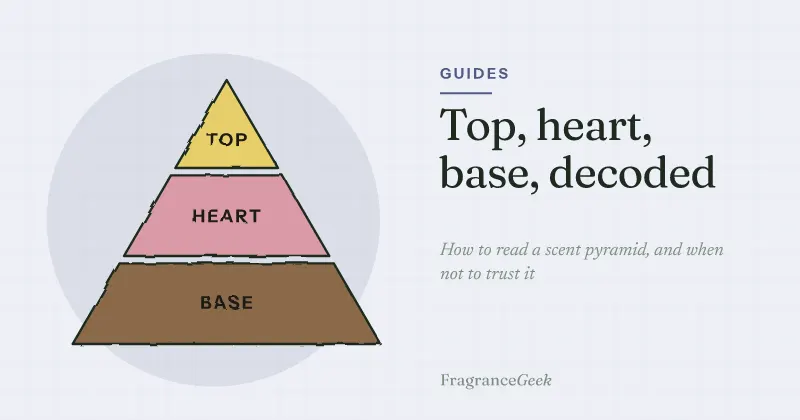
Iris often sits in the heart of a fragrance, adding a powdery, refined layer that smooths out sharper notes. It pairs well with leather, woods, vanilla and violet.
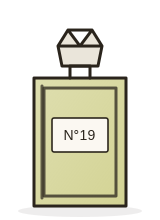
- Chanel No. 19 (1970): a sharp green opening that settles into a famously cool iris heart
- Guerlain Shalimar (1925): iris adds a powdery layer to the vanilla and amber
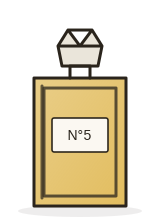
- Chanel No. 5 (1921): iris is listed among its heart notes, under the aldehydes
- Le Labo Santal 33 (2011): iris and violet sit alongside the sandalwood and cardamom


Fragrances on this site that list iris