Nina Ricci opened her own couture house at around 49, after decades of sewing for someone else. Yet the thing most people picture when they hear her name is not a dress. It is a crystal bottle with two doves, dreamed up by her son.
A mother at the scissors, a son at the books
Born Maria Nielli in Turin in 1883, she moved to France at 12 and was apprenticed to a dressmaker at 13. In 1908 she joined the House of Raffin, where she stayed for more than twenty years.
In 1932 she and her son Robert founded Nina Ricci in Paris. The split was clean: she designed the gowns, he handled the money, the marketing and, before long, the smells.
How a dress house became a perfume house
Robert Ricci set up an in-house perfume division in 1941. His first fragrance, Coeur-Joie, followed in 1946, and two years later came the one that would carry the name for generations.
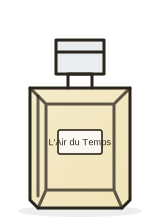
That was L’Air du Temps, composed with the perfumer Francis Fabron. It is a soft, spicy floral of carnation and clove over rose, jasmine and sandalwood, and it became the house’s signature in a way no single dress ever did.
- 1932
Nina and Robert Ricci open in Parisfact
- 1941
An in-house perfume divisionfact
Robert's idea
- 1946
Coeur-Joiefact
The first Ricci fragrance
- 1948
L'Air du Tempsfact
Composed with Francis Fabron
- 1951
The Lalique dove bottlefact
- 1970
Nina Ricci diesfact
- 1988
Robert Ricci diesfact
- 1998
Puig buys the housefact
- 2006
Nina, in the apple bottlefact
Doves, apples and a habit of sculpted glass
Ricci perfumes have always been sold on their bottles as much as their juice. The dove stopper turned a flacon into a keepsake, and later designers, including Marie-Claude Lalique and Philippe Starck, were asked to reinterpret it.
The modern house plays the same game with fruit. Nina, launched in 2006 and credited to Olivier Cresp and Jacques Cavallier, comes in a red apple-shaped bottle that nods to an earlier Ricci perfume, Fille d’Ève.
| Perfume | Year | What it smells like | The bottle |
|---|---|---|---|
| Coeur-Joie | 1946 | Robert Ricci’s first floral | Lalique |
| L’Air du Temps | 1948 | Spicy carnation and soft florals | Two Lalique doves (from 1951) |
| Nina | 2006 | Bright apple and lemon over a sweet base | A red glass apple |
Where to start with Nina Ricci
Start with L’Air du Temps. It explains the house in one spray: gentle, pretty and a little nostalgic, the kind of perfume that tends to come with a family story attached.
The doves, still flying
If you prefer your florals fruitier and your bottles more whimsical, the apple-shaped Nina family is the modern face of the house. Just don’t try to bite it.