Myrrh has the best résumé in perfumery: embalming in Egypt, sacred oils in the Hebrew Bible, a starring role in the Nativity. Yet on skin it is the least sugary of the famous resins, bitter enough to make a sweet perfume sit up straight.
Bitter, cool and a little like mushrooms
Myrrh smells dry, bitter and resinous, with a cool, slightly medicinal quality. Perfumers often describe facets of licorice, damp earth and mushroom, sitting under a thin thread of smoke.
It is less cozy than benzoin and less sparkly than frankincense. If those two are a fireplace and a candle, myrrh is the cold stone floor of the chapel.
- Bitterness
- mild bitter
- Sweetness
- dry sweet
- Smokiness
- none smoky
- Earthiness
- clean mushroomy
How myrrh oil and resinoid are generally described in perfumery.
Bleeding the tree, drop by drop
The resin comes mainly from Commiphora myrrha, a small thorny tree of the Horn of Africa and southern Arabia. Harvesters cut into the bark until it weeps a waxy gum, which hardens into glossy yellowish tears.
The trees grow wild in Somalia, Somaliland, Ethiopia, Eritrea, Yemen, Oman and parts of Saudi Arabia. From the same tears, perfumers get several materials.
| Form | How it is made | What it adds |
|---|---|---|
| Resinoid | Solvent extraction of the tears | Dense, bitter depth that lasts |
| Essential oil | Steam distillation | Lighter, smokier, more medicinal lift |
| Raw resin | Burned as incense | The ritual, churchy smell itself |
Four thousand years of myrrh
- Old Kingdom Egypt
Expeditions to Puntfact
King Sahure's expedition brings back large quantities of myrrh.
- Ancient Egypt
Embalmingfact
Myrrh is used with natron to prepare the dead.
- Hebrew Bible
Sacred anointing oilfact
Myrrh is named as a rare perfume and an ingredient of holy oil and incense.
- Gospel of Matthew
Gold, frankincense and myrrhfact
The Magi bring it as one of three gifts.
Myrrh in a modern bottle
In perfume, myrrh mostly works in the base, adding a dark, ecclesiastical shadow to ambers, incense blends and spicy orientals. A little goes a long way, since too much smells more pharmacy than palace.
Myrrh and frankincense come from the same plant family and are often sold side by side, but they pull in opposite directions. Frankincense lifts a blend with a bright, peppery, citrus-like sparkle, while myrrh drags it down into shadow, and perfumers often use the two together for exactly that contrast.
On this site, YSL Opium is the clear example, setting myrrh beside labdanum, opoponax and benzoin in one of the most resinous bases of the 1970s. It pairs naturally with incense, rose and vanilla, which soften its bitterness without hiding it.
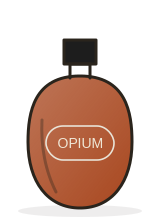
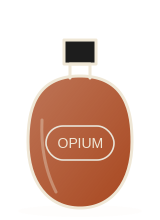
Fragrances on this site with myrrh in the pyramid