Perfume vocabulary sounds like a wine list written by a French botanist. Fougère means fern, which smells of nothing much. Chypre means Cyprus, which is an island.
The names are odd, but the ideas behind them are simple. Each family is a recipe shape, and once you can spot the shapes, the perfume counter starts to make sense.
How many fragrance families are there?
There’s no official list. Brands, retailers and reference guides all use slightly different systems.
The best-known map is the fragrance wheel developed by the consultant Michael Edwards for his reference guide, Fragrances of the World. Its current version arranges scents into four broad families, floral, amber, woody and fresh, each split into subfamilies that blend into their neighbors.
Many writers also keep the older French families, fougère and chypre, because they describe a structure rather than a single note. And gourmand, the edible-smelling family, gets its own name almost everywhere.
| Family | Built around | Feels like | Classic example |
|---|---|---|---|
| Fougère | Lavender, coumarin, oakmoss | Barbershop, clean, herbal | Dior Sauvage (aromatic fougère), Jean Paul Gaultier Le Male |
| Chypre | Bergamot, labdanum, oakmoss | Dry, mossy, elegant | Guerlain Mitsouko, Dior Diorella |
| Amber (oriental) | Vanilla, resins, spices | Warm, rich, sweet | Guerlain Shalimar, YSL Opium |
| Floral | Rose, jasmine, white flowers | Romantic, bright or creamy | Chanel No. 5, Robert Piguet Fracas |
| Woody | Cedar, sandalwood, vetiver | Dry, calm, grounded | Hermès Terre d’Hermès, Le Labo Santal 33 |
| Fresh | Citrus, herbs, green and watery notes | Light, clean, sparkling | Dior Eau Sauvage |
| Gourmand | Vanilla, caramel, chocolate, praline | Edible, cozy, dessert-like | Mugler Angel |
What makes a fougère smell the way it does?
The fougère family takes its name from Houbigant’s Fougère Royale, created by Paul Parquet and usually dated to 1882. It’s famous for using coumarin, a then newly synthesized material with a sweet, hay-like smell.
The core accord is lavender on top, coumarin in the middle and oakmoss in the base. Herbal, clean, faintly sweet: the smell most people associate with a traditional barbershop.
Modern fougères usually add pepper, woods or ambery synthetics, and are often called aromatic fougères. Dior Sauvage, with its peppery bergamot over lavender and ambroxan, is a well-known modern example.
Bottles mentioned
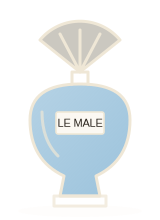
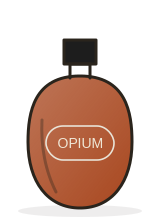
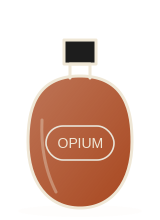
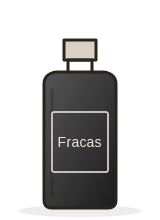
Affiliate link: as an Amazon Associate we earn from qualifying purchases, at no extra cost to you.
What makes a perfume a chypre?
A chypre pairs bright citrus, usually bergamot, with a dark base of labdanum and oakmoss. The contrast is the point: sunny on top, shadowy and mossy underneath.
The name comes from François Coty’s Chypre of 1917, usually described as the first composition built on that bergamot, labdanum and oakmoss accord. Coty’s original is no longer sold, but its structure lives on.
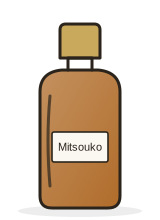
Guerlain’s Mitsouko, from 1919, is the classic example of a fruity chypre, adding a soft peach note to the formula.
- Topthe first 15 minutesBergamot · Lemon
- Heartthe next few hoursPeach · Rose · Jasmine · Lilac · Ylang-ylang
- Basewhat stays on skinOakmoss · Vetiver · Cinnamon · Labdanum · Spices
What is an amber fragrance, and why did “oriental” fall out of use?
Amber fragrances are warm, rich and often sweet, built on vanilla, resins, balsams and spices. “Amber” here describes a style, not a single raw material.
For decades the family was called oriental. In 2021, Michael Edwards announced that Fragrances of the World would replace the word with amber in its English-language classifications, citing the term’s colonial connotations. Many retailers and brands have made the same switch, though you’ll still see the old word.
Guerlain’s Shalimar is the textbook example: bright bergamot over a deep base of vanilla, tonka, opoponax and incense. YSL Opium, from 1977, took the spicy side of the family into the disco era.
What about floral, woody, fresh and gourmand?
These four are easier, because the names describe the smell.
- Floral: the biggest family, from the aldehydic sparkle of Chanel No. 5 to the creamy tuberose of Robert Piguet’s Fracas
- Woody: dry and grounded, built on cedar, sandalwood or vetiver; Jean-Claude Ellena’s Terre d’Hermès is a modern classic, and Le Labo Santal 33 a modern hit
- Fresh: citrus, herbs, green and watery notes; Dior’s Eau Sauvage is the reference for crisp citrus aromatics
- Gourmand: edible notes such as caramel, chocolate and praline; Mugler’s Angel, from 1992, is widely credited with launching the modern style
Families also overlap all the time. Baccarat Rouge 540 is often filed as an amber floral, and plenty of fragrances sit on the border between two groups.
- 1882
Fougère Royalefact
Houbigant and Paul Parquet give the fougère family its name, with coumarin at the heart.
- 1917
Coty Chyprefact
François Coty sets the bergamot, labdanum and oakmoss template.
- 1919
Guerlain Mitsoukofact
The fruity chypre, with peach over moss.
- 1921
Chanel No. 5fact
Aldehydes become the signature of a floral style.
- 1925
Guerlain Shalimarfact
Vanilla and resins define the amber family for generations.
- 1992
Mugler Angelfact
Widely credited as the first modern gourmand.
- 2021
Oriental becomes amberfact
Fragrances of the World renames the family in English.
How do you find your fragrance family?
Start with what you already love. Write down three to five fragrances you enjoy, look up their families on our profiles or a fragrance database, and see which word keeps recurring.
Then test the theory:
- Sample two or three other fragrances from that family, ideally from different houses
- Try one from a neighboring family, such as a woody amber if you love woods, to see how far your taste stretches
- Notice what you dislike too; a family you avoid is just as useful to know
Once you know the shapes, the French stops being intimidating. A chypre is just sunshine on moss, and a fougère is a well-groomed fern.