In this story · 6 parts
Sherlock Holmes is famous for reading cigar ash, mud and shirt cuffs. In his most famous novel, the clue that first points him at the villains is a smell.
It’s a tiny moment, a few sentences in the wrap-up chapter, and most readers rush past it. Perfume lovers don’t. Here’s what Holmes says, why it matters to the plot, and whether you could pull off the same trick.
Where does the 75 perfumes line appear?
It’s in Chapter 15 of The Hound of the Baskervilles, the one where Holmes and Watson sit by the fire in Baker Street after the case and Holmes walks through his reasoning.
He recalls examining the warning letter Sir Henry received in London. Holding it close to his eyes to look for a watermark, he caught a faint scent.
“seventy-five perfumes”
The number Holmes gives Watson for the scents a criminal expert must be able to tell apart
He adds that more than one of his cases has turned on recognizing a perfume quickly. Conan Doyle never lists the seventy-five. Victorian readers were left to imagine a very well-stocked mental cabinet.
How does a whiff of jasmine crack the case?
Spoiler warning: this section gives away part of the solution.
Early in the novel, Sir Henry Baskerville receives an anonymous note at his London hotel warning him to keep away from the moor. The words are cut out of a newspaper and glued to the page.
Holmes studies the paper for clues and notices that it smells, faintly, of white jessamine. In the late-Victorian world of the story, that means one thing to him: a woman has handled this letter.
That’s enough to turn his attention to the Stapletons, the naturalist and the woman he presents as his sister, before Holmes ever sets foot in Devon. He tells Watson he had guessed at the criminal before they went west.
What is white jessamine?
“Jessamine” is an old English form of jasmine. White jessamine is the common white jasmine, Jasminum officinale, long grown in English gardens and used in perfumery.
By the 1890s, single-flower jasmine scents were standard stock at London perfumers. A Victorian lady could buy a jasmine water or extract as easily as a modern shopper picks up a body mist.
So Holmes isn’t identifying something exotic. He’s recognizing a popular feminine scent of the day on a scrap of paper, from a whisper of it. The impressive part is the nose, not the perfume.
His leap from “jasmine” to “a lady” also says a lot about the period. Victorian etiquette sorted scents by gender far more strictly than we do. Respectable men kept to colognes, lavender waters and barbershop bouquets; sweet single-flower perfumes belonged on handkerchiefs, gloves and writing paper owned by women.
Scenting notepaper was a genuine habit of the time, which makes the clue fairer than it looks. A lady’s stationery could easily pick up her perfume from a drawer or a glove. Conan Doyle didn’t need to explain any of that to readers in 1902. They’d have smelled it themselves.
Today the logic would fall apart. Jasmine turns up in plenty of men’s fragrances, and a modern Holmes would need a few more clues before suspecting anyone.
- Sweetness
- dry sweet
- Indolic depth
- clean animalic
- Freshness
- Projection
- skin scent fills a room
Reflects how jasmine is generally described, not a test of any particular product
Could a Victorian detective tell 75 perfumes apart?
Easily, if he worked at it. London was full of perfumers when the novel appeared. Floris had been trading on Jermyn Street since the 1730s, and Penhaligon’s had opened in 1870.
| Victorian scent world | Real example | Holmes connection |
|---|---|---|
| Single-flower waters | Jasmine, rose, violet, lavender | The “white jessamine” clue |
| Gentlemen’s barbershop scents | Penhaligon’s Hammam Bouquet (1872) | The barbershop London that Holmes and Watson moved through |
| Classic colognes | Citrus and lavender splashes | Everyday wear for men like Watson |
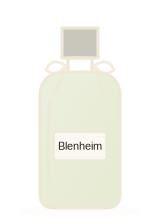
| Penhaligon’s Blenheim Bouquet | Launched 1902, the year the novel came out as a book | A fun period match |
Seventy-five distinct scents across those families isn’t superhuman. Professional perfumers train to recognize hundreds of raw materials, and experienced ones can name many more.
What makes Holmes unusual is applying it to crime. In The Sign of Four, he also boasts of a monograph on telling apart 140 kinds of tobacco ash, so this is a man who classifies smells for a living.
Fragrances in this story
Affiliate link: as an Amazon Associate we earn from qualifying purchases, at no extra cost to you.
Can you train your nose like Holmes?
You can get surprisingly far with a few simple habits. None of them requires a deerstalker.
- Smell with intent: when you meet a scent, name it out loud, even roughly (“lemony, soapy, a bit woody”)
- Compare in pairs: two blotters side by side teach you far more than one on its own
- Learn the building blocks: smell single notes such as jasmine, rose, lavender and bergamot until you’d know them blind
- Keep a scent diary: a line per smell, so the memory has something to stick to
- Rest your nose: a few minutes of fresh air between sniffs keeps you from going “nose blind”
Start with ten scents you can identify with your eyes closed. Then twenty. Seventy-five is a hobby, not a superpower.
- 1730
Floris opens in Londonfact
The house is still trading on Jermyn Street.
- 1870
Penhaligon's opensfact
A barber turned perfumer sets up shop in London.
- 1890
The Sign of Fourfiction
Holmes mentions his monograph on tobacco ash.
- 1901–1902
The Hound of the Baskervillesfiction
Serialized in The Strand, then published as a book.
- 1902
Blenheim Bouquet launchesfact
Penhaligon's citrus-pine classic, still on sale.
Is Holmes’s perfume skill realistic?
Real perfume, fictional nose. The quote is genuinely in the book, the jasmine clue is a real plot point, and white jessamine was a real and common scent.
What’s fiction is the idea that an ordinary detective could catch a faint jasmine note on a glued-up letter and be certain of it. It’s a stretch, but a believable one. That’s the whole Holmes formula, applied to the nose.
If you want a bottle from Holmes’s London on your own shelf, Blenheim Bouquet is a true period piece. Floris No. 89 is younger, launched in 1951, but it comes from a Jermyn Street shop that was already old when Holmes was solving cases.