Everyone has met the person you smell before you see them. Usually they’re lovely, they simply have no idea, because their nose stopped reporting about twenty minutes after the eighth spray.
There’s no universal correct number. There are, though, some good rules of thumb, and one very reliable way to know when you’ve gone too far.
What’s a sensible number of sprays?
Most fragrance writers and retailers suggest somewhere between two and four sprays for an everyday fragrance. That’s a starting point, not a law. The right amount depends on the fragrance, the setting and the weather.
Common rules of thumb, not a standard. Strength varies enormously between fragrances, so adjust for the bottle in front of you.
Concentration is part of the story, and our guide to EDT vs EDP vs parfum explains how the labels differ. But the ingredients matter as much as the label. An EDT built on heavy woods and ambery synthetics can be louder than a citrus EDP.
How many sprays suit each occasion?
Context changes everything. A spray that feels perfect on an outdoor walk can be overpowering in a meeting room with the windows shut.
| Setting | Suggested amount | Why |
|---|---|---|
| Office or classroom | 1–2 sprays, on skin under clothes | Shared, enclosed space, and people can’t move away |
| Plane, train, car | 1 spray, or skip it | Close quarters, recycled air, no escape |
| Date or dinner | 2–3 sprays | Close enough to be noticed, not so much it competes with the food |
| Evening out, party | 3–4 sprays | Bigger spaces, more movement |
| Outdoors, warm day | 2–3 sprays of something light | Heat makes scent bloom faster |
| Outdoors, cold day | 3–4 sprays | Cold air mutes fragrance |
| Medical appointments, hospitals | None | Many have scent-free policies |
Why does the office deserve the lightest touch?
Because in a shared room, your fragrance becomes everyone’s fragrance. People can’t step away from the person at the next desk.
There’s also a health side. In a 2016 national survey of US adults, researcher Anne Steinemann found that about 35 percent reported health problems such as headaches or breathing difficulties when exposed to fragranced products. That’s self-reported, not a clinical diagnosis, but it’s a sizable share of any office.
Where do the sprays go?
Placement changes how loud a fragrance seems as much as quantity does.
- For a quieter effect: the chest or stomach, under a shirt; the clothing holds it close
- For more presence: the neck and behind the ears, which are warm and close to other people
- For your own enjoyment: the wrists, where you can smell it yourself
- For a soft trail: one spray in the air, walked through, or one on a scarf
Spray from about a hand’s length away, so the mist lands as a light layer rather than a wet patch. And skip the wrist rubbing, which perfumers widely advise against. Our guide to making perfume last longer explains why.
Why can’t you smell your own perfume after a while?
Because your brain is doing its job. Olfactory fatigue, also called olfactory adaptation or nose blindness, is the normal, temporary loss of sensitivity to a smell you’ve been around for a while.
It’s why you don’t notice the smell of your own home, and it’s why people over-spray. You stop smelling your perfume after a while, assume it’s gone, and add more, while everyone around you can still smell the first round.
To check without reapplying:
- Smell a sleeve or scarf you didn’t spray directly
- Leave the room for a few minutes and come back
- Ask someone honest, and believe them
Which fragrances need only a spray or two?
Some fragrances are famously potent. They’re built on long-lasting, strongly diffusing materials, often ambery woods and synthetics like ambroxan, and a little goes a long way.
Fragrances often described this way include:
- Baccarat Rouge 540: known for a big, airy trail out of proportion to the dose
- Creed Aventus: fruity, smoky and confident, rarely in need of more than a couple of sprays
- Dior Sauvage: its peppery, ambroxan-heavy freshness projects strongly
- Mugler Angel: a dense gourmand with a reputation for filling a room
Bottles mentioned
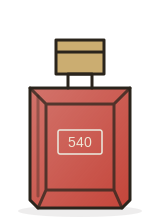
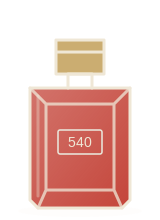
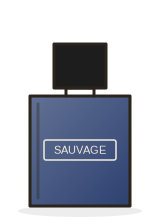
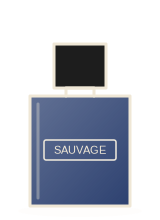
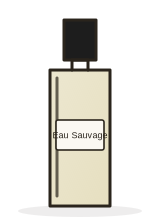
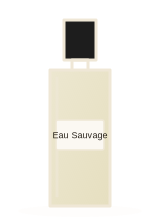
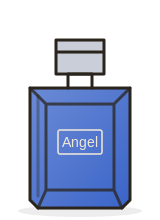

Affiliate link: as an Amazon Associate we earn from qualifying purchases, at no extra cost to you.
Light colognes sit at the other end. A traditional citrus cologne like Dior Eau Sauvage is designed to be applied more generously and refreshed through the day, because bright notes like lemon and bergamot fade fast.
How do you know you’ve overdone it?
The signs are easy to read once you know them:
- People can smell you clearly from across a room
- A lift, car or meeting room still smells of you after you leave
- Someone comments on your fragrance before saying hello
- Your clothes still smell strongly the next day
If that’s you, don’t panic. Wipe pulse points with an unscented wipe or a little soap and water, open a window, and use one spray fewer tomorrow. Nobody gets the number right every time; the goal is to be noticed by the people near you, not announced to the whole floor.