You spray at 8 a.m., smell wonderful at 8:05, and by the first meeting the scent seems to have left the building. Did your perfume vanish, or did your nose clock off?
Often it’s a bit of both. Some of what fades is chemistry you can work with, and some is a trick of perception you can only learn to ignore.
Why does a fragrance seem to vanish so fast?
Perfume is a blend of aromatic materials in alcohol, and those materials evaporate at very different speeds. Chemists call this volatility. Small, light molecules, the kind behind citrus and many fresh notes, lift off skin quickly. Heavier ones linger.
So a cologne built mostly on lemon and bergamot is designed to be a brilliant, short burst. No hack will turn it into a twelve-hour scent.
Three other factors play a part:
- Concentration: an EDT usually carries less perfume oil than an EDP, so there’s simply less to last
- Skin: dry skin is often said to hold fragrance less well than hydrated skin
- Your nose: after a while, the brain filters out a constant smell, so you stop noticing it long before others do
A rough illustration of general tendencies, not measured data. The formula, the dose and your skin all shift these numbers.
Does rubbing your wrists ruin perfume?
It’s the most common habit in the world, and perfumers almost universally ask people to stop. The usual explanation is that friction warms the skin, and warmth speeds up evaporation of the most fragile top notes.
Some articles go further and claim rubbing “crushes” or breaks fragrance molecules. That part is shaky. We couldn’t find a controlled study either way, so treat the whole thing as sensible advice rather than proven science.
The practical case is simple, though. Rubbing gains you nothing, and it may cost you the opening the perfumer worked hardest on.
Where on the body does perfume last longest?
The classic advice is pulse points: wrists, the sides of the neck, behind the ears, the inner elbows. These spots are warm, which helps the scent radiate. Warmth also speeds evaporation, so the trade-off is more presence for less time.
Fabric is a different story. Many people find a spray on a scarf, a collar or the inside of a jacket lasts far longer than the same spray on skin, because clothes don’t warm it up or absorb it the same way.
| Where | What it does well | The catch |
|---|---|---|
| Wrists | Easy, and you can smell it yourself | Washed and rubbed constantly |
| Neck and behind the ears | Warm, radiates well | Can feel strong up close |
| Inner elbows and chest | Steady, under clothes | Quieter projection |
| Hair | Moves with you, holds scent | Alcohol can dry hair; spray lightly or on a brush |
| Scarf, collar, jacket lining | Often lasts the longest | Possible stains on silk and pale fabric |
Does moisturizer help perfume last?
It’s one of the most repeated tips, and the reasoning is plausible: hydrated skin is a less thirsty surface, and the oils in a lotion give fragrance materials something to hold onto. Many fragrance lovers swear by it.
We should be honest about the evidence. Plenty of beauty sites quote precise percentages, but we couldn’t trace any of them to a published study. So call it a low-risk habit with a lot of anecdotal support.
How to do it:
- Use an unscented lotion, so it doesn’t clash with the fragrance
- Apply it a few minutes before you spray, so the skin isn’t slippery
- If a fragrance comes with a matching body lotion, layering the two is the same idea with the house’s blessing
Some people dab a little petroleum jelly on pulse points before spraying. It works on the same principle. It’s greasy and not for every outfit, but it’s cheap and easy to try.
Which notes and fragrances hold on longest?
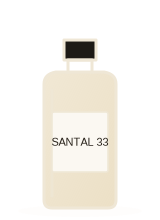
If longevity matters to you, read the base notes before anything else. Fragrances built on sandalwood, patchouli, musks, vanilla, tonka and ambery woods such as ambroxan tend to last much longer than citrus colognes.
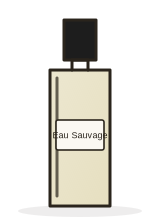
A few examples from our profiles show the pattern:
Neither style is better. A fresh cologne is meant to be reapplied, the way it was in the eighteenth century, and that’s half the pleasure.
Bottles mentioned
Affiliate link: as an Amazon Associate we earn from qualifying purchases, at no extra cost to you.
Does concentration change how long it lasts?
Usually, yes. An EDP generally holds more perfume oil than an EDT, and a parfum more again. More oil tends to mean more hours on skin.
But the ingredients matter just as much. A woody EDT can outlast a citrus EDP. Our full guide to EDT vs EDP vs parfum covers the numbers and the exceptions.
Can you still smell your own perfume after an hour?
Often you can’t, and that’s normal. The brain is built to tune out a steady smell so it can notice new ones. Researchers call it olfactory adaptation, and it’s why you stop smelling your own kitchen.
This matters because the most common response is to spray again, and again. Meanwhile the people around you can still smell the first application perfectly well.
A few checks before you reapply:
- Sniff a spot you didn’t spray, like a sleeve or scarf, which your nose hasn’t adapted to
- Step outside or into another room for a few minutes, then smell your wrist
- Ask someone you trust; they’ll tell you, probably more honestly than you’d like
The nine habits, in one list
- Moisturize with something unscented first
- Spray, don’t rub
- Use warm pulse points for presence, and fabric for staying power
- Choose fragrances with a solid base of woods, musks, resins or vanilla
- Pick an EDP or parfum when longevity is the goal
- Carry a small travel atomizer for a midday top-up
- Store bottles away from heat and light, so the juice stays in shape (see how to store perfume)
- Check with a fresh nose before reapplying
- Accept that some fragrances are meant to be brief, and enjoy them for it
Longevity is partly the bottle, partly your skin and partly your brain. You can only change the first two, so start there.