In this story · 7 parts
Napoleon is remembered for conquering Europe. Perfume historians remember him as one of eau de cologne’s best customers.
He didn’t wear a perfume in the modern sense at all. He wore something closer to a scented splash, and he went through it the way most generals go through boots.
What was in Napoleon’s cologne?
Eau de Cologne was launched in Cologne in 1709 by Johann Maria Farina, an Italian perfumer who named it after his adopted city. It became one of the most copied formulas in history.
The style is simple: a lot of alcohol and a bright splash of citrus oils, usually bergamot, lemon and orange, lifted with neroli, rosemary and sometimes lavender. No heavy base, no musk, no vanilla.
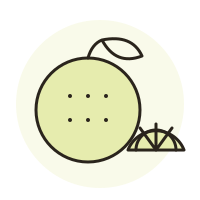





Typical eau de cologne ingredients; exact Napoleonic formulas varied by supplier
It smells like a lemon grove after rain and a clean shirt. It fades fast, which is half the reason he needed so much of it.
In Napoleon’s day, cologne also sat halfway between perfume and medicine. These citrus-and-herb waters were sold as refreshing tonics, rubbed on the skin, added to washing water and recommended for everything from fatigue to bad air.
That explains the scale of his habit better than vanity does. He used it the way we use soap, shower gel and aftershave combined, rubbing it over his body after washing rather than dabbing it behind the ears. A man who did that daily, sometimes more than once, would go through bottles at a rate that looks absurd only if you picture a modern perfume spray.
It also fits the man. Contemporaries describe Napoleon as fastidious about cleanliness, and he reportedly disliked heavy perfumes. A splash that smelled of fresh citrus suited a soldier who wanted to feel clean rather than smell expensive.
Where did Napoleon get it?
In 1806 a descendant of the Farina family, Jean Marie Farina, opened a perfumery in Paris. The business later passed to Roger & Gallet, which still sells a Jean Marie Farina cologne and counts the Emperor among the shop’s famous early customers.
He wasn’t loyal to one shop, though. Napoleonic-era Paris had several licensed makers of eau de cologne. The Fondation Napoléon, for example, publishes a recipe by the perfumer Durochereau, authorized in 1811, describing it as a cologne Napoleon liked to wear.
Some histories also name a court perfumer, Chardin, with a standing order for regular deliveries. We found the name repeated widely but not traced to a primary record, so treat that detail as reported.
How much cologne did Napoleon get through?
This is where the story gets slippery. Everybody agrees he used a great deal. Nobody agrees on how much.
| Claim | Where it comes from | How solid |
|---|---|---|
| He splashed cologne on after washing, every day | Valets’ memoirs and later biographies | Strong, widely documented |
| About 50 to 60 bottles a month | Popular histories, often citing a perfumer’s standing order | Plausible, but the paperwork is rarely quoted |
| 72 bottles in October 1808 | An invoice in the French National Archives, as cited by a cologne brand | Specific, but we haven’t seen the document ourselves |
| One to three bottles a day | Repeated in blogs and brand copy | Weak; it multiplies the monthly figures |
| Around 120 liters a month | Attributed to a historian in French press | Likely garbled; it doesn’t square with the bottle counts |
| He drank it on sugar | Anecdote linked to cologne’s use as a health tonic | Possible, thinly sourced |
Part of the confusion is bottle size. Cologne in that era often came in slim rolls of modest volume, so “a bottle a day” sounds more dramatic than it was.
Figures as reported by secondary sources; none of them is a verified total
Our reading: dozens of small bottles a month is believable for a man who doused himself after every wash and handed it out to his household. Anything with a precise daily figure is decoration.
What happened to his cologne on St Helena?
Exile didn’t cure the habit. On St Helena, cut off from Paris suppliers, Napoleon’s valet Louis-Étienne Saint-Denis, known as Ali, is said to have mixed a cologne for him from what he could get.
Ali wrote the recipe down. Long after, perfumer Jean Kerléo of the Osmothèque, the perfume archive in Versailles, reconstructed it from that formula, according to the archive and the brand that now sells a version. It sits in the Osmothèque’s collection of historic scents.
It’s one of the more touching footnotes in perfume history. An emperor who had lost everything still wanted to smell like a lemon grove in the morning.
- 1709
Farina launches eau de colognefact
In Cologne, named after the city.
- 1806
A Farina shop opens in Parisfact
Jean Marie Farina sets up; the business later becomes Roger & Gallet.
- 1808
A month of colognelegend
An invoice for 72 bottles is cited from the National Archives.
- 1811
Durochereau licensedfact
A Paris perfumer whose cologne Napoleon is said to have liked.
- 1815–1821
Exile on St Helenafact
His valet Ali mixes cologne for him and records the recipe.
- 1853
Guerlain's Eau de Cologne Impérialefact
Made for Empress Eugénie, wife of Napoleon III. Often confused with the first Napoleon.
Did he tell Josephine not to wash?
You’ve probably seen the line where Napoleon writes to Josephine that he’s coming home and she shouldn’t bathe. It’s quoted endlessly as proof that he preferred natural scent to cologne.
The letter is widely cited, but its wording and date are shaky in most retellings. Even if it’s genuine, it’s about Josephine, not about him; he kept dousing himself in citrus.
Which colognes are closest to Napoleon’s today?
You can still buy several descendants of the old Farina style. Roger & Gallet’s Jean Marie Farina, the Farina house’s own Original Eau de Cologne and 4711 all sit in that citrus-and-herb family.
On this site, the closest relative is Acqua di Parma’s Colonia, a 1916 Italian take on the same idea, with a bit more lavender and a soft woody finish.
Fragrances in this story
Affiliate link: as an Amazon Associate we earn from qualifying purchases, at no extra cost to you.
If you want something with a little more imperial swagger, Guerlain’s Jicky (1889) starts like a cologne, citrus and lavender, then turns warm and ambery. Different century, same appetite for a big splash.
How solid is the Napoleon cologne story?
Fact, with inflated numbers. Napoleon’s heavy use of eau de cologne is well documented, and so is the link with Paris cologne makers such as the Farina shop. The St Helena recipe survives and has been reconstructed.
What’s shaky is the arithmetic. Treat “60 bottles a month” as a colorful estimate, and anything involving liters as a game of telephone played across two centuries.