Bandit was launched in wartime Paris for women, named after a thief, and built on a material that smells like burnt rubber and ink. Decades later, it still smells like someone who has just talked back.
The masked-models legend
The most famous Bandit story is the runway. As it is usually told, Robert Piguet presented the perfume in 1944 with models in robbers’ masks, waving toy pistols and knives. The tale is repeated in nearly every account of the perfume, though primary documentation of the show is thin.
- 1944
Bandit launchesfact
Germaine Cellier composes it for the couturier Robert Piguet.
- 1944
The masked runwaylegend
Models reportedly carried toy guns and wore bandit masks.
- 1948
Fracas followsfact
Cellier and Piguet go the other way, with tuberose.
- Late 1990s
Re-orchestratedfact
New owners relaunch Bandit and Fracas in updated versions.
Isobutyl quinoline, the leather in the room
Bandit’s bite comes largely from isobutyl quinoline, a synthetic with a dark, leathery, almost smoky smell. Cellier is said to have used it at around 1 percent, which was considered a heavy dose. Add galbanum’s green bitterness and a mossy chypre base, and you get a perfume that feels like a black leather glove left on a forest floor.








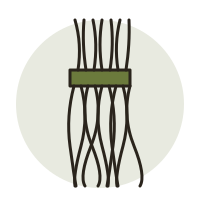

Green, bitter and leathery from start to finish
How it differs from other chypres
| Bandit | Mitsouko | No. 19 | |
|---|---|---|---|
| Year | 1944 | 1919 | 1970 |
| Signature | Bitter leather | Peach and moss | Green iris |
| Mood | Defiant | Melancholy | Cool and poised |
| Sweetness | Almost none | Low | Low |
Many perfume writers trace a line from Bandit to later leathery chypres such as Grès Cabochard. It is one of the reference points for the whole category.
Four years after Bandit, the same perfumer and couturier made Fracas, a creamy tuberose that could hardly be more different. Smelling the two side by side is a quick lesson in Cellier’s range: one bitter and severe, the other lush and theatrical.
Wearing Bandit now
The first minutes are the hardest. Galbanum and leather arrive together, bitter and smoky, and some people find it closer to a garage than a perfume counter. After an hour the flowers in the middle soften the edges, and the drydown turns mossy, dry and surprisingly elegant.
The modern version is softer than vintage, but it is still not a crowd-pleaser. It suits cool weather, black clothes and evenings when you want to be remembered.
You will love it if
- Bitter, dry, leathery scents are your favorites
- You like perfumes with history and attitude
- Mitsouko or No. 19 already feels too polite
Maybe skip it if
- You want something sweet or soft
- Sharp green notes give you a headache
- You prefer to blend in