Patchouli has a reputation it didn’t entirely earn. Yes, it was the signature smell of the late 1960s, but it is also one of the most important base notes in classic and modern perfumery, hiding in bottles that would never be caught near a headshop.
Cocoa, soil and an old wine cellar
Patchouli smells earthy, woody and dark, with a sweet, almost chocolatey richness and a slightly camphorous, minty edge. Good patchouli can smell like damp soil, wine cellars, cocoa powder and old books.
Cheap patchouli can smell like a headshop. Both are technically patchouli.
- Earthiness
- clean damp soil
- Sweetness
- dry cocoa-sweet
- Darkness
- light dark
- Minty, camphor edge
- none strong
How patchouli oil is generally described. Refined 'clean' fractions sit lower on earthiness.
A mint-family leaf that ages like wine
Patchouli (Pogostemon cablin) is a bushy plant in the mint family, grown mainly in Indonesia. The leaves are dried and often lightly fermented before steam distillation.
Unusually, the oil improves with age, becoming smoother and richer, a bit like wine. Few perfume materials get better in the cupboard; most just sulk.
From moth-proof shawls to the late 1960s
The story goes that 19th-century shawls from India were packed with patchouli leaves to deter moths. That is how the smell became fashionable in Europe, long before anyone wore it with a fringed vest.
Then came the late 1960s, when patchouli became the signature smell of the era, and the reputation stuck.
Patchouli’s serious career in the base
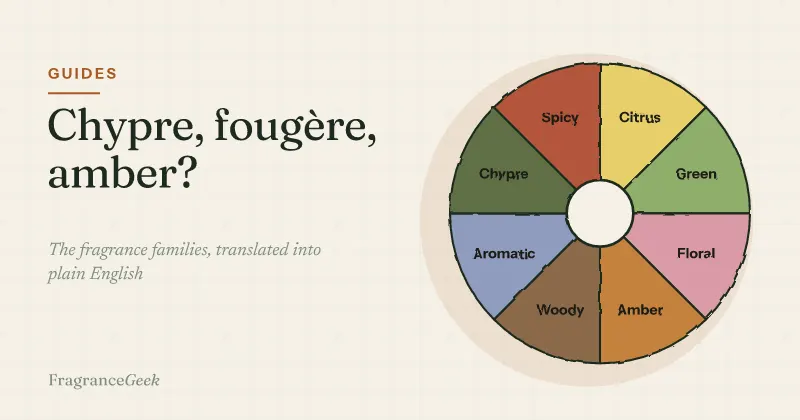
Patchouli is a base note that adds depth, darkness and staying power. It is a key part of the chypre structure, alongside bergamot and oakmoss, and many modern perfumers use “clean,” refined fractions that strip out the muddy notes.
- Creed Aventus: patchouli in the heart, with birch, jasmine and rose
- Terre d’Hermès: patchouli in the woody base with vetiver and cedar
- Dior Eau Sauvage: Dior names patchouli in its chypre accord with oakmoss
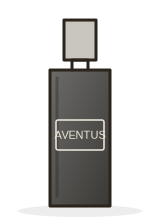
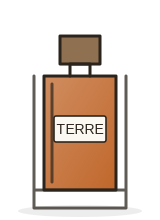



Patchouli working quietly in some very well-dressed bottles
Patchouli or vetiver?
They are the two great earthy notes, and they are often confused. Patchouli is sweeter, darker and more cocoa-like; vetiver is drier, greener and smokier.
| Patchouli | Vetiver | |
|---|---|---|
| Part of the plant | Dried leaves of a mint-family bush | Roots of a tropical grass |
| Sweetness | Sweeter, cocoa-like | Drier |
| Character | Darker and richer | Greener and smokier |
| Where it grows | Mainly Indonesia | Native to India; Haiti and Java are big producers |
Give patchouli another chance if
- You like dark chocolate, damp earth or old books
- You enjoy classic chypres
- You want a base that lasts
Proceed gently if
- Your only memory of it is a headshop
- Camphor and mint notes bother you
- You prefer airy, sheer scents