The cypress has spent two thousand years as the official tree of grief, planted in cemeteries from Italy to Iran. Distill its needles, though, and the mood changes completely: you get a dry, sunny, resinous green that smells more like a road trip through Tuscany than a funeral.
Dry needles and a whisper of smoke
Cypress oil smells woody, resinous and slightly smoky, with a clean evergreen freshness on top. Compared with pine it is drier and less sharp, more like sun-baked bark than snapped twigs.
There is often a faint ambery sweetness in the drydown. It gives cypress a quiet, contemplative feel that suits its reputation.
- Evergreen freshness
- muted bright
- Dryness
- juicy parched
- Smoky edge
- none campfire
- Sweetness
- dry sweet
How cypress oil is generally described; batches vary with origin and how much twig goes into the still.
Ovid’s grieving boy and a 4,000-year-old tree
The Mediterranean cypress (Cupressus sempervirens) is native to the eastern Mediterranean and Iran. It is also called Italian, Tuscan and Persian cypress, which tells you how many cultures have claimed it.
Classical writers tied it to mourning, and Ovid told of Cyparissus, a boy transformed into the tree after grieving for a stag. Iran sees it differently: there it is sacred, and a poetic image of a graceful beloved. The Sarv-e Abarkuh in Iran’s Yazd Province is often estimated at around 4,000 years old, though nobody has proved it.
Cypress and its usual partners
Perfumers use cypress mostly in the top and heart, where it adds an airy, woody-green lift. Its best partners show both sides of its character.
| Partner | What happens | Mood |
|---|---|---|
| Myrtle | Herbal, slightly camphorous freshness doubles up | Mediterranean garden |
| Rose | Dry wood frames the petals | Romantic, restrained |
| Sandalwood | Creamy wood softens the resin | Calm, meditative |
| Citrus and juniper | Brightness takes over | Crisp cologne |
Because it is dry rather than sweet, cypress also helps keep heavier woods from turning syrupy. A small amount reads like an open window in a room full of incense.
Diptyque Tam Dao (2003) uses the first three. Cypress, myrtle and rose open over a heart of sandalwood, cedarwood and rosewood, with amber and musk below, and the result smells like a quiet temple more than a forest.
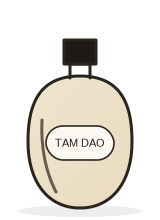
A fragrance on this site with cypress in the pyramid
Wearing a tree with a past
Cypress suits people who like their woods quiet and dry. It works in warm weather, when sweeter ambers feel too much, and it layers easily with citrus colognes.
Its somber symbolism never reaches the skin. On a summer evening it smells less like a cemetery and more like a hillside path lined with tall, dark trees.