Cypriol belongs to the same plant genus as papyrus, the reed the ancient Egyptians turned into paper. Its relative never made it into a library. Instead, its roots end up in perfume, where they smell less like a scroll and more like a forest floor after a bonfire.
Smoky roots from a riverbed sedge
Givaudan sources its cypriol oil from India, where the plant grows in riverbeds in the Madhya Pradesh region. Villagers dig up the roots between February and June. They are washed and dried, then steam distilled much the way vetiver roots are.
The oil goes by two names. Cypriol echoes the genus name Cyperus, and nagarmotha is the name used in India. Same bottle, different label.
Earth, smoke and a whiff of oud
Suppliers agree on the broad picture: woody, earthy and dry, with a spicy undertone. Givaudan adds a mossy facet, and dsm-firmenich goes further, calling its version warm, animalic and oud-like, with leathery shading.
| Material | Part of the plant | How it is usually described |
|---|---|---|
| Cypriol | Roots of a sedge | Smoky, earthy, woody, a little leathery |
| Vetiver | Roots of a grass | Earthy, green, dry, sometimes smoky |
| Patchouli | Dried leaves of a mint-family bush | Dark, damp and cocoa-like |
That overlap is the point. Cypriol sits where vetiver’s dryness and patchouli’s damp earth meet, and it can push a woody base toward the darker, barnyard-adjacent territory of oud.
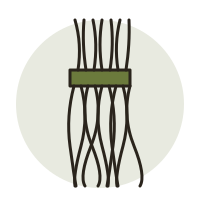




Materials it is most often compared with or blended beside
A botanical name with a question mark
The trade calls the plant Cyperus scariosus, and suppliers such as Givaudan and dsm-firmenich use that name on their oils. Botanists are less tidy about it.
Where perfumers use it
Givaudan says cypriol is mainly blended with other woody notes, and also serves as a heart note in neo-chypres. dsm-firmenich points to its use in modern, crystal-clear chypres. It is a supporting player more often than a headliner.
You will rarely see it on a mainstream note list. Nomenclature is an exception: it lists cypriol in Cardamom Milk, part of the Ligatures trio by Firmenich perfumer Frank Voelkl.