The rosewood in perfume has nothing to do with the rosewood in a guitar. It comes from a tall Amazonian tree whose chipped trunk, distilled, smells less like timber than like a rose garden with a sprig of lavender, and that sweet smell nearly logged it out of existence.
A woody note that smells like flowers
Rosewood oil smells fresh, soft and floral-woody, with a rosy, lavender-like sweetness and a light citrus lift. The wood itself stays in the background, more pencil shaving than campfire.
In a composition it acts as a gentle bridge between bright top notes and the floral heart. It brings polish, never weight.
Pau-rosa: the tree perfume nearly emptied
The source is Aniba rosaeodora, called pau-rosa in Brazil, a tree of the laurel family native to the Amazon rainforest. The oil is steam distilled from chipped wood, and each tree yields only about one percent oil by weight.
Because harvesting meant felling whole trees, wild populations crashed, and logged areas have regrown poorly.
Linalool and the stand-ins
Most of rosewood oil is linalool, a soft floral-woody molecule also found in lavender and coriander. That makes it relatively easy to imitate.
| Material | Source | How close it gets |
|---|---|---|
| Brazilian rosewood oil | Aniba rosaeodora wood | The original, now restricted |
| Ho wood oil | A linalool-rich camphor tree type | Similar lift, less nuance |
| Synthetic linalool | Laboratory | Clean core of the effect |
Bois de rose in the pyramids here
On this site, rosewood appears in Guerlain Habit Rouge (1965) and Chanel Égoïste (1990), opening with citrus and spice. Chanel Cristalle (1974) lists it in a green floral heart, and Diptyque Tam Dao (2003) places it among sandalwood and cedar.
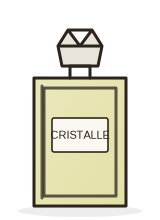


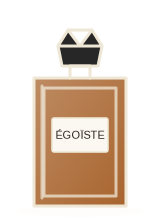
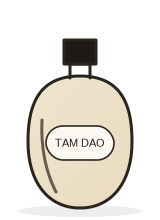
Fragrances on this site with rosewood in the pyramid
Whether a given modern bottle uses Brazilian oil or a substitute is rarely disclosed. On a pyramid, “rosewood” usually describes the effect rather than guaranteeing the tree.