Grapefruit owes much of its smell to a sulfur molecule that, in larger doses, smells nothing like breakfast. Diluted to traces, it reads as pure juicy pink citrus, which says a lot about how strange the nose can be.
Tart, pink and faintly sweaty
Grapefruit smells bitter, tart and juicy at once, with a woody, slightly sulfurous undertone that sets it apart from lemon and orange. Some people find that edge sparkling, others find it a touch sweaty.
It is drier than mandarin and more grown-up than orange, which is why it turns up so often in fresh scents sold to men. Breakfast, but in a blazer.
A sulfur molecule and a woody one
Two compounds carry the grapefruit signature, and they could hardly be more different.
| Molecule | What it contributes | Strength |
|---|---|---|
| Nootkatone | Woody, bitter peel character | Moderate, fairly long-lasting for a citrus material |
| Grapefruit mercaptan (1-p-menthene-8-thiol) | Juicy, fresh-squeezed punch | One of the most potent odorants known, smelled in minute traces |
Born by accident in Barbados
The fruit itself is a newcomer. Grapefruit arose as a chance cross between the pomelo and the sweet orange, both brought to the Caribbean from Asia, and was first recorded on Barbados in the 18th century.
That makes it one of the youngest major citrus fruits, a few centuries old where lemon and bitter orange go back much further. Early accounts called a related fruit the “forbidden fruit”, though historians debate whether it was the grapefruit we know.
Grapefruit with vetiver and pepper
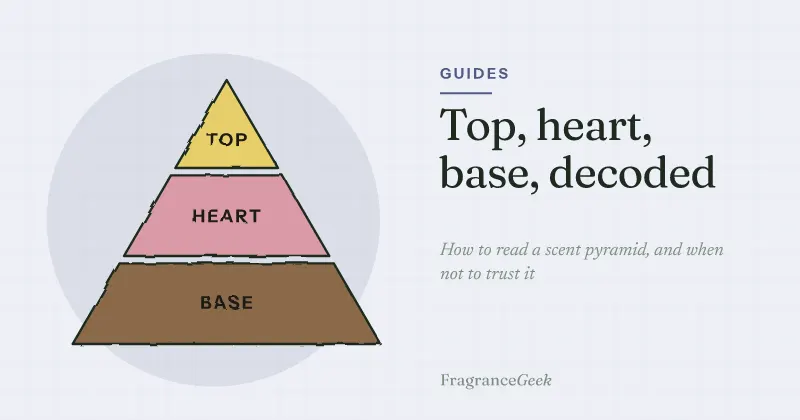
Its bitterness makes grapefruit a natural match for dry woods. Guerlain Vetiver and Hermès Terre d’Hermès both put it at the top of a vetiver-rich composition, and Bleu de Chanel pairs it with lemon, mint and pink pepper.
Jean-Claude Ellena used it in Un Jardin sur le Nil next to green mango, while Jo Malone Wood Sage & Sea Salt sets it against ambrette, sage and a salty accord.

Fragrances on this site that list grapefruit in their pyramid