Every perfume is already a blend of dozens of materials, so layering two of them sounds like asking for chaos. Done carelessly, it is: two sweet bestsellers on one wrist can smell like a candy shop on fire.
Done with a little thought, layering is the cheapest way to own a scent nobody else wears. You already have the ingredients on your shelf.
What does layering perfume mean?
It means wearing more than one scented product so they merge into a single impression. That can be two perfumes sprayed on the same spots, a scented body lotion under a matching spray, or a perfume oil worn beneath an alcohol-based fragrance.
Some brands build whole ranges around the idea. Jo Malone London has long promoted “fragrance combining”, designing its colognes to be mixed and publishing suggested pairings of its own.
Layering has deeper roots too. Across much of the Arab world, perfuming is a multi-step ritual: bakhoor incense scents the home and is passed among guests, while concentrated perfume oils are often worn alongside sprays.
Which perfume goes on first?
The usual rule is heavy first, light on top. Dense materials such as vanilla, amber, resins and woods evaporate slowly and anchor the blend, while citrus and fresh notes lift off fast and work best as the final layer.
Reverse the order and the light scent tends to vanish under the heavy one. It’s a rule of thumb rather than chemistry set in stone, so test both ways if a combination isn’t working.
A simple routine:
- Start with clean, moisturized skin, or an unscented lotion
- Apply the base scent to your usual pulse points and let it settle for a minute
- Add the top scent on the same spots, or one spray higher up, such as the neck
- Wait ten minutes before judging, because the opening of a combination is the least reliable part
What makes two perfumes layer well?
The safest bridge is a shared note. If both fragrances contain bergamot, musk or vanilla, that common thread helps the pair read as one scent instead of two people talking over each other.
A second approach is contrast with a plan: something fresh against something warm, or a sharp green against a soft musk. Contrast works best when one partner is simple, so the combination has a clear lead.
 Ambrette
 Grapefruit

 Sea Salt

 Sage

 Red Algae
 Pear
 Melon
 Freesia
 Rose

 Patchouli

 Amber
 Musk
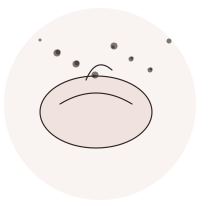
The two Jo Malone colognes above share little on paper, a salty sage on one side and juicy pear on the other. That is the contrast approach in action, and both are light enough that neither smothers the other.
Which combinations are worth trying?
These pairings follow the heavy-first, shared-note logic. They’re starting ideas based on how each fragrance is built, not tested formulas, so sample on a weekend before wearing them to an interview.
| Base layer | Top layer | Why it can work |
|---|---|---|
| A vanilla or amber scent, such as Tobacco Vanille | A citrus cologne, such as Acqua di Parma Colonia | Bright citrus gives a heavy, sweet base an airy opening |
| Molecule 01 (Iso E Super) | Almost any floral or citrus | A single woody-musky material adds a halo without changing the lead |
| A clean musk | A rose or fruity floral | Musk softens sharp edges and stretches a light floral |
| A sea-salt or mineral scent | A pear or soft fruit scent | Salt keeps sweetness from feeling sugary |
| A spicy amber, such as Musc Ravageur | A woody vetiver | Dry roots calm a warm, purring base |
Bottles mentioned
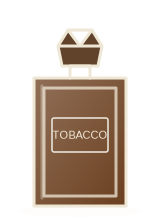
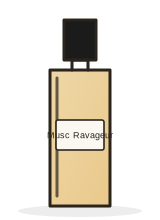
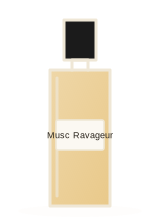
Affiliate link: as an Amazon Associate we earn from qualifying purchases, at no extra cost to you.
Molecule 01 is the favorite layering tool for a reason. It is built around one material, Iso E Super, which many people describe as a soft, cedary glow, and its simplicity means it rarely fights a partner.
Which scents are easiest to layer?
As a broad guide, the simpler and quieter the fragrance, the easier it is to pair. The scale below is our editorial judgment, not survey data, and individual perfumes break the pattern all the time.
- Single-material musks and woods
- tricky easy
- Citrus colognes
- tricky easy
- Soft vanillas
- tricky easy
- Big white florals
- tricky easy
- Heavy oud and smoky leather
- tricky easy
- Two very sweet gourmands
- tricky easy
An editorial rule of thumb for pairing styles. Your skin and your nose overrule it.
What are the most common layering mistakes?
Most failed combinations come down to volume rather than taste. Two perfumes at full dose add up to a lot, so cut back on both; our guide to how many sprays of perfume is a useful reference point.
Other frequent slips:
- Pairing two showpieces. Two complex, loud perfumes rarely merge; they compete
- Stacking sweet on sweet. Caramel plus praline plus vanilla turns cloying fast
- Judging too early. The first minute smells mostly of alcohol and top notes
- Forgetting the setting. A combination that’s lovely at home may be too much in a shared office
Is layering worth it?
For many people, yes, especially if a favorite cologne fades too fast or a perfume feels almost right but not quite. For others, a single well-chosen bottle is simpler and just as satisfying.
Layering is worth trying if
- Your favorite light scent disappears by lunch
- You enjoy experimenting with what you already own
- You want a combination nobody else wears
You may prefer one bottle if
- You like a scent exactly as the perfumer made it
- You're sensitive to strong smells
- You'd rather not think about your perfume each morning
If you want a long-lasting effect without layering, our guide on how to make perfume last longer covers other tricks. And if layering helps you discover the combination you wear every day, you may have found more than a recipe; see how to find your signature scent.