Hedione takes its name from the Greek word for pleasure, which sounds like marketing until you learn that a brain-scan study linked it to a receptor associated with pheromones. Perfumers love it for a simpler reason: it makes almost any formula smell more spacious.
Lemon, tea and transparent petals
Hedione smells softly floral and fresh, like jasmine with the heavy, indolic parts taken out. Around it hover hints of lemon peel, green tea and magnolia.
On its own it is quiet, almost too polite. Its gift is radiance: it lifts the notes around it and makes a composition feel airy and diffusive.
- Jasmine character
- hint full bloom
- Citrus freshness
- none zesty
- Radiance
- close room-filling
- Sweetness
- dry sweet
How Hedione is generally described; it reads stronger in a blend than in a blotter test.
Hedione or jasmine absolute?
| Hedione | Jasmine absolute | |
|---|---|---|
| Origin | Synthesized in the lab | Extracted from the flowers |
| Character | Sheer, lemony, airy | Rich, heady, slightly animalic |
| In the natural flower | About 0.8 percent of jasmine absolute | The whole bouquet |
| Typical role | Volume and transparency | A lush floral heart |
The cologne that let the air in
- 1957–1962
Demole at Firmenichfact
The molecule is identified in jasmine, characterized and synthesized.
- 1966
Dior Eau Sauvagefact
Edmond Roudnitska gives it its landmark first use.
- 1996
Acqua di Giòfact
Hedione sits in the watery heart of Armani's marine classic.
- 2015
A brain-imaging studyfact
Researchers report Hedione activates the VN1R1 receptor.
Roudnitska set Hedione into a citrus cologne structure and got a lemony, magnolia-like jasmine glow without making the scent overtly floral. That idea of transparency and projection shaped perfumery for decades, and the molecule became one of perfumery’s most common building blocks.
In practice, perfumers reach for Hedione the way a cook reaches for salt. It rarely gets the spotlight on a note list, yet it makes citrus sparkle longer, softens woods and gives florals a sense of air between the petals.
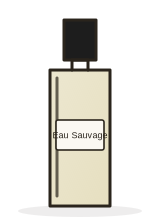
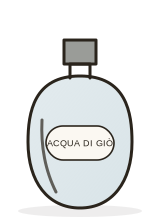
Two Hedione landmarks on this site
Can a jasmine molecule flirt?
In 2015 a team led from Ruhr University Bochum reported in NeuroImage that Hedione activates VN1R1, a putative human pheromone receptor found in the nose. Brain scans showed stronger activity in emotional areas than with a standard floral smell, and a hypothalamic response that was stronger in women.
The work focused on one receptor and a set of brain scans, so it opens a question rather than closing one. The researchers cautioned that this does not prove humans communicate by pheromones. So a spritz of Eau Sauvage is not a love potion, though it remains an excellent cologne.