In this story · 8 parts
- How did a dress fitting turn into a perfume?
- Why is it called “forbidden”?
- What did Hepburn’s L’Interdit smell like?
- Why did a floral aldehydic suit her so well?
- Is the L’Interdit on sale today the same perfume?
- How the story grew
- How close can you get to Hepburn’s scent?
- Our verdict on the L’Interdit story
Most celebrity perfumes start with a contract. Audrey Hepburn’s started with a friend’s gift and a playful veto.
The story of L’Interdit is one of the cleanest in the Worn By files. There’s a designer, an actress, a perfume made for one person, and a name that is basically a joke about not sharing.
How did a dress fitting turn into a perfume?
Hubert de Givenchy opened his couture house in Paris in 1952. A year later, Audrey Hepburn turned up looking for clothes for Sabrina, and the two began a working friendship that lasted the rest of her life.
He dressed her on screen and off. His name is attached to some of her best-remembered looks, most famously the black dress in Breakfast at Tiffany’s.
When Givenchy moved into fragrance in the mid-1950s, it made sense to start with his favorite client. L’Interdit was reportedly composed with her in mind and given to her as a private scent.
For a few years, by most accounts, she was the only person wearing it. Imagine having a perfume so exclusive that the only way to smell it was to stand next to Audrey Hepburn.
Why is it called “forbidden”?
Interdit is French for “forbidden,” and the name comes from Hepburn herself, at least according to the house story.
When Givenchy decided to sell the perfume to the public in 1957, she is said to have objected, half joking, that she forbade it. The scent was hers. Givenchy took the protest as a title, and she came round to the launch.
It’s a lovely anecdote, and it’s repeated by Givenchy and in most histories of the fragrance. Like many brand stories, though, it comes down to us through the house. We’d call the gist reliable and the exact wording polished.
What did Hepburn’s L’Interdit smell like?
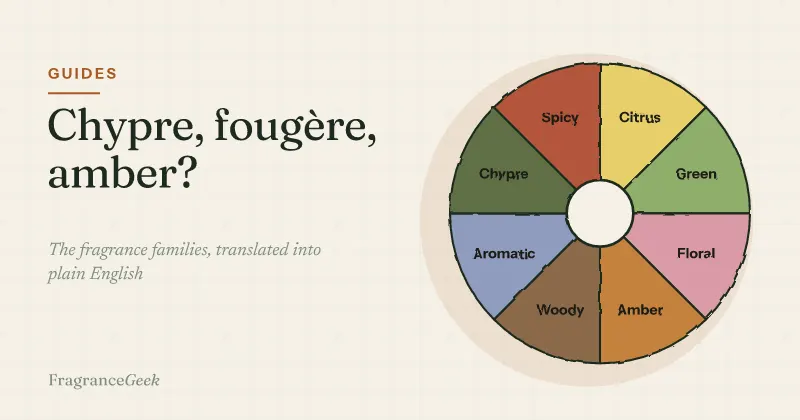
The original was created by perfumer Francis Fabron, the same nose behind Nina Ricci’s L’Air du Temps. It’s classed as a floral aldehydic, the family made famous by Chanel No. 5.
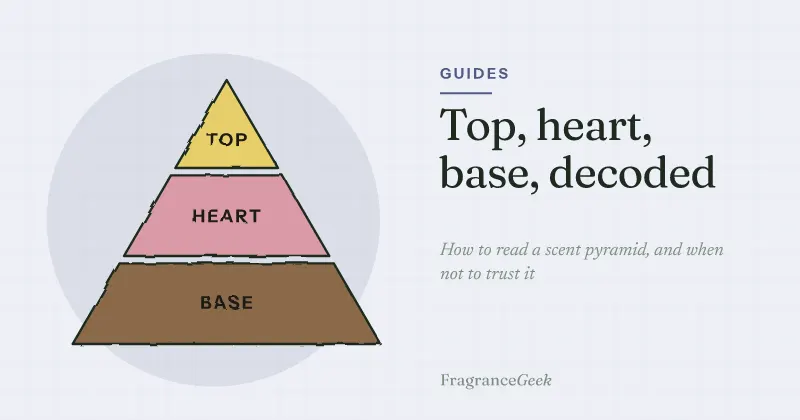
That means a bright, slightly soapy fizz at the top, followed by a soft floral heart and a powdery finish. Sources describe rose, jasmine and violet, a touch of carnation and clove, and a base with woods and tonka bean.










Reconstructed from reference descriptions of the 1957 formula; individual sources differ in detail
In plain English: clean, polished, powdery and a little reserved. It was not a loud perfume. It suited a woman whose whole public style was understatement with excellent tailoring.
Why did a floral aldehydic suit her so well?
By the 1950s, floral aldehydics were the grown-up perfume of choice. Chanel No. 5 had set the template in 1921, and Lanvin’s Arpège followed in 1927. The style signaled Paris, couture and a certain kind of composure.
L’Interdit took that formula and made it lighter on its feet. Where No. 5 can feel like a fur coat, Hepburn’s perfume is usually described as a well-cut jacket: the same family, younger in spirit.
That matches her screen image almost too neatly. In Sabrina and Funny Face she plays young women who are transformed by Paris without losing their charm. A perfume that was proper but not stuffy was the olfactory version of the gamine look Givenchy built for her.
It also explains why the scent stayed hers rather than becoming a mass trend. It was polite, not provocative. In a decade of big, sultry orientals, the “forbidden” perfume was, with some irony, one of the better-behaved bottles on the counter.
Is the L’Interdit on sale today the same perfume?
No, and this matters if you’re buying for the Hepburn story. The original was discontinued in the US in the 1990s and reformulated in the early 2000s.
The 2018 relaunch is a different perfume under the old name, signed by three perfumers: Dominique Ropion, Anne Flipo and Fanny Bal. It kept the name and the “forbidden” theme, then moved the scent somewhere much darker and more modern.
| 1957 original | 2018 relaunch | |
|---|---|---|
| Perfumer | Francis Fabron | Dominique Ropion, Anne Flipo, Fanny Bal |
| Family | Floral aldehydic | White floral with a woody, patchouli base |
| Opening | Aldehydes, a soapy sparkle | Bergamot and pear, as commonly listed |
| Heart | Rose, jasmine, violet | Tuberose, orange blossom, jasmine sambac |
| Base | Woods, tonka bean, powder | Patchouli, vetiver, ambroxan, vanilla |
| Mood | Polished, powdery, discreet | Sweet, dark, evening |
| Worn by Hepburn? | Yes | No, it arrived long after her death in 1993 |
Reviewers were split on the reboot. Some found it a likeable, wearable modern floral, while vintage fans pointed out that it shares little beyond the name. Both camps can be right at once.
Fragrances in this story
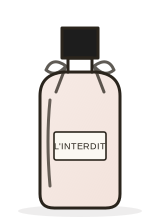
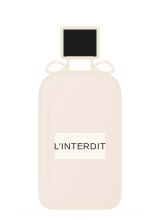
Affiliate link: as an Amazon Associate we earn from qualifying purchases, at no extra cost to you.
The modern version has also spawned flankers, including a richer Parfum, all built on the 2018 template rather than Fabron’s original.
How the story grew
- 1952
Givenchy opens his couture housefact
He sets up in Paris and quickly becomes a name in couture.
- 1953
Hepburn meets Givenchyfact
She comes to him for clothes for Sabrina. A long friendship begins.
- Mid-1950s
A perfume for onefact
L'Interdit is made for Hepburn and worn privately before any launch.
- 1957
Public launchlegend
Givenchy puts it on sale. The house says the name came from her joking objection.
- 1990s
Discontinued in the USfact
The original drifts off shelves, followed by an early-2000s reformulation.
- 2018
A new L'Interditfact
A fresh composition by Ropion, Flipo and Bal relaunches the name.
Of all the “what did this star wear” questions, this one has an unusually short chain of evidence. The house that made the perfume is the house that dressed her, and she put her face on the advertising.
How close can you get to Hepburn’s scent?
If you want her exact perfume, you’re in vintage territory: older bottles turn up at auction and on resale sites, with all the usual risks of age, storage and fakes.
If you want the spirit of it, look for a powdery floral aldehydic: bright, soapy, a bit old-Hollywood. Our L’Interdit pick above carries the name and the history, even if the juice has moved on.
And if all else fails, wear a perfect black dress and a slightly forbidden expression. That part of the formula never changed.
Our verdict on the L’Interdit story
Fact. Audrey Hepburn wore L’Interdit, Givenchy made it for her, and she fronted its launch.
The only soft spot is the wording of the “I forbid you” exchange, which reaches us through the house and has been told many times. The friendship, the perfume and the advertising are all on solid ground.