In this story · 7 parts
- Do celebrities wear the perfumes they advertise?
- Was Marilyn Monroe the ultimate unpaid endorsement?
- Which famous faces admitted wearing it less than the ads suggest?
- How does celebrity fragrance licensing work?
- Who built a perfume from what they already wore?
- How can you tell a real favorite from a paid one?
- Should you buy a perfume because a star wears it?
Perfume ads are among the strangest things in advertising. A famous person runs along a beach, kisses someone in black and white or recites a poem, and the product never appears to touch their skin.
So it is fair to ask whether the people in the ads wear the stuff. The evidence runs on a sliding scale, and it starts with the most famous unpaid endorsement in history.
Do celebrities wear the perfumes they advertise?
A campaign face signs a contract to appear in films, photographs and press events. Wearing the perfume at home is usually no part of the public deal, and brands rarely say either way.
That leaves interviews. When a star does describe their own habits, the answer is often more relaxed than the ad suggests.
| Star | Bottle | Paid role | What they said about wearing it | How solid |
|---|---|---|---|---|
| Marilyn Monroe | Chanel No. 5 | None found | Told the press in 1952, and again on tape in 1960, that she wore it to bed | Documented, unpaid |
| Marion Cotillard | Chanel No. 5 | Face from 2020 | Told Grazia she always wears Chanel at big events, less on other days | Her own words, nuanced |
| Brad Pitt | Chanel No. 5 | First male face, 2012 | Admitted in 2012 he couldn’t pick the scent out on the street | Nothing on wearing it |
| Johnny Depp | Dior Sauvage | Face since the 2015 launch | Has described the scent in interviews, without a clear statement that he wears it daily | Unclear |
| Sarah Jessica Parker | Lovely | Her own licensed scent, 2005 | Based it on a blend she already wore | Documented |
Was Marilyn Monroe the ultimate unpaid endorsement?
She was. In 1952 a journalist asked Monroe what she wore to bed, and her answer was a perfume. She repeated the story in a 1960 interview recorded for Marie Claire, and in 1955 a photographer caught her applying the scent in a hotel room.
No reliable source shows that Chanel paid her for any of it. The house only made the link official decades later, when it built a 2013 campaign on that old recording. Our Marilyn Monroe perfume story lays out each piece of evidence.
Fragrances in this story
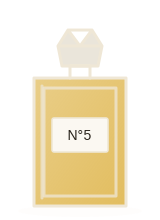
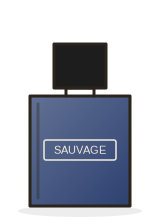


Affiliate link: as an Amazon Associate we earn from qualifying purchases, at no extra cost to you.
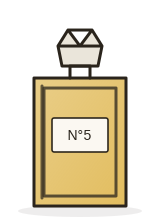
The perfume itself, Chanel No. 5, was composed by Ernest Beaux in 1921. It has had paid faces for decades since, which makes Monroe’s free endorsement the benchmark every later contract gets measured against.
Which famous faces admitted wearing it less than the ads suggest?
Marion Cotillard is the clearest case. Chanel announced her as the face of No. 5 in February 2020, ahead of the perfume’s hundredth birthday, and her campaign film came out that autumn.
Asked about her own habits, she told Grazia there is no rule. She might wear perfume every day for a while, then go without it, and sometimes she simply smells the bottle for the pleasure of it. At big events, she said, she always wears Chanel.
That is a more honest picture than most ads offer, and it is still a real endorsement. She wears the brand when it matters, just not as a daily uniform.
Then there are the silences. Brad Pitt became the first man to front No. 5 in 2012, in a black and white film directed by Joe Wright, and we found no interview in which he said whether he wears it. Asked at a 2012 press junket whether he could identify the scent on the street, he answered: “That I can’t.” Johnny Depp has fronted Dior Sauvage since its 2015 launch and has talked about the scent’s character, but not, in anything we found, about spraying it every morning.
- 1952
Monroe answers a cheeky questionfact
Chanel No. 5, she says. No contract behind it.
- 1987
Elizabeth Taylor's Passionfact
Her first fragrance, with her closely involved.
- 2005
Sarah Jessica Parker launches Lovelyfact
Built from a blend she already wore.
- 2012
Brad Pitt fronts No. 5fact
The first man in the role. What he wears at home is not on record.
- 2015
Johnny Depp and Sauvagefact
He becomes the face at launch and stays for years.
- 2020
Marion Cotillard and No. 5fact
Later tells Grazia she wears Chanel for big events.
How does celebrity fragrance licensing work?
A celebrity perfume, as opposed to a campaign face, carries the star’s own name. The star licenses that name to a beauty company, which develops, makes, distributes and markets the bottles. Perfumers at fragrance suppliers such as IFF write the formulas.
David Beckham Instinct is a typical example: a 2005 citrus fougère sold by Coty and composed by two IFF perfumers. Elizabeth Taylor’s Passion in 1987 was her first fragrance, and White Diamonds followed in 1991 with Elizabeth Arden. Her official brand history says she was closely involved in developing them, down to the bottle and the name.
Involvement varies hugely from one deal to the next. Some stars approve a shortlist, while others shape the brief.
Who built a perfume from what they already wore?
Sarah Jessica Parker is the best-documented case. When she pitched Lovely in the mid-2000s, she proposed a scent based on a mixture she already wore: a drugstore musk, an Egyptian oil bought in New York and Comme des Garçons’ incense scent Avignon.
The perfumers Clement Gavarry and Laurent le Guernec of IFF turned that idea into Lovely, softened with orange blossom and lavender, and it launched in 2005. Chandler Burr followed its development in his 2008 book The Perfect Scent, alongside Un Jardin sur le Nil by Hermès.
It shows the other end of the scale. Here the star’s own habit came first, and the product was built around it.
How can you tell a real favorite from a paid one?
Look at timing first. A perfume a star mentioned before any deal, or kept mentioning after one ended, carries more weight than anything said on a press tour.
Signs of a real favorite
- Mentioned unprompted, outside any campaign
- Named years before a contract, or after it ended
- Consistent across many interviews
- Witnesses or records back it up
Signs of a paid script
- Only mentioned at a launch or in press materials
- Praise that echoes the ad copy word for word
- A new favorite with every new contract
- No detail about when or how they wear it
For historical figures, the test is documents. Monroe has a photograph and a tape; our story on Kate Middleton’s wedding perfume rests on her household’s statement. Without that kind of record, a celebrity favorite is a guess with good lighting.
Should you buy a perfume because a star wears it?
Buy the smell, not the face. Even a perfume a star wears every day was chosen for their skin, their life and their taste, none of which you share.
If a famous name gets you curious, that is a fine reason to try a sample. Wear it for a full day, as in our guide to samples and decants, and decide when the dry-down has settled, long after the ad has stopped playing in your head.