Diorella is the perfume that makes people ask “wait, is that melon?”, and that question is basically its personality. It’s Eau Sauvage’s sibling, made by the same hand, who wandered off into the fruit bowl and came back with moss on its shoes.
Wait, is that melon?
It is. Diorella opens with sharp lemon and bergamot, a green herbal hint of basil and a juicy, slightly watery melon. That melon gives it a quirky, almost overripe edge that perfume lovers either adore or find puzzling.
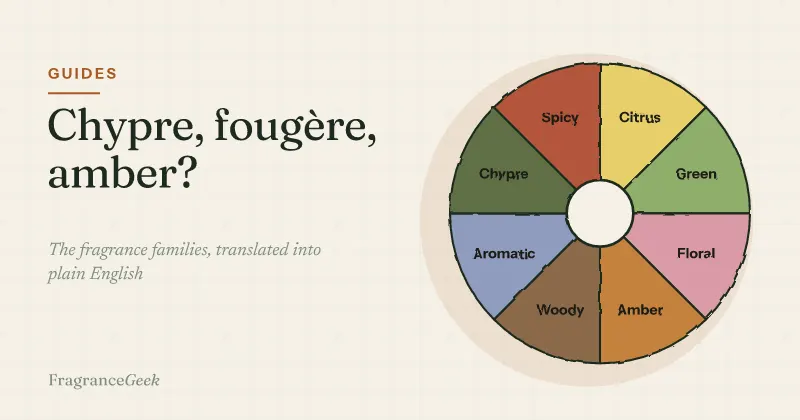
The heart turns soft and fruity-floral: honeysuckle, jasmine and peach, with carnation and rose in supporting roles. Then it dries down into a classic chypre base of oakmoss, vetiver and patchouli, earthy and a bit bitter.
- Freshness
- heavy airy
- Fruitiness
- none fruit bowl
- Mossiness
- clean forest floor
- Formality
- relaxed black tie
Reflects how Diorella is generally described, not personal testing.
Picture a sun-warmed fruit bowl left out on a mossy stone terrace: bright, lazy and slightly decadent.
How is Diorella related to Eau Sauvage?
Edmond Roudnitska created Diorella, launched by Dior in 1972. It is often described as the feminine counterpart of his Eau Sauvage (1966), and the two share a citrus-herbal backbone. Roudnitska pushed this one further toward fruit and moss, landing it in the chypre family.
 Lemon
 Bergamot

 Basil

 Melon

 Green Notes
 Honeysuckle
 Jasmine
 Peach
 Carnation
 Rose

 Cyclamen

 Oakmoss

 Vetiver

 Patchouli
 Musk
- Lemon
- Bergamot
- Basil

 Rosemary
- Jasmine
- Carnation

 Coriander
- Vetiver
- Oakmoss
- Musk
Diorella simply has more going on. Count the notes listed in each profile and the difference is mostly in the heart.
| Eau Sauvage | Diorella | |
|---|---|---|
| Year | 1966 | 1972 |
| Family | Citrus aromatic | Chypre fruity |
| Twist | Airy jasmine effect | Watery melon and peach |
| Base | Vetiver, oakmoss, musk | Oakmoss, vetiver, patchouli, musk |
| Marketed to | Men | Women |
Why does your vintage bottle smell different?
Like many chypres, Diorella has been reformulated over time, mostly because of modern limits on oakmoss. Older bottles can smell noticeably different, usually mossier.
Roudnitska was famous for working with a fairly restrained palette and focusing on harmony, which partly explains why so many perfumers cite his work. Even with the busier note list, Diorella still feels composed rather than crowded.
When does a melon chypre make sense?
Diorella shines in spring and summer, for office days, casual weekends and relaxed dates. It’s genuinely unisex, and it suits anyone who likes fresh scents with a twist and doesn’t mind being quizzed about fruit.
If you love Eau Sauvage, Diorella is the logical next step: more fruit, more moss, a little more mischief. If you enjoy Guerlain Mitsouko’s peachy chypre style, this is its brighter, breezier cousin.